Energy Storage
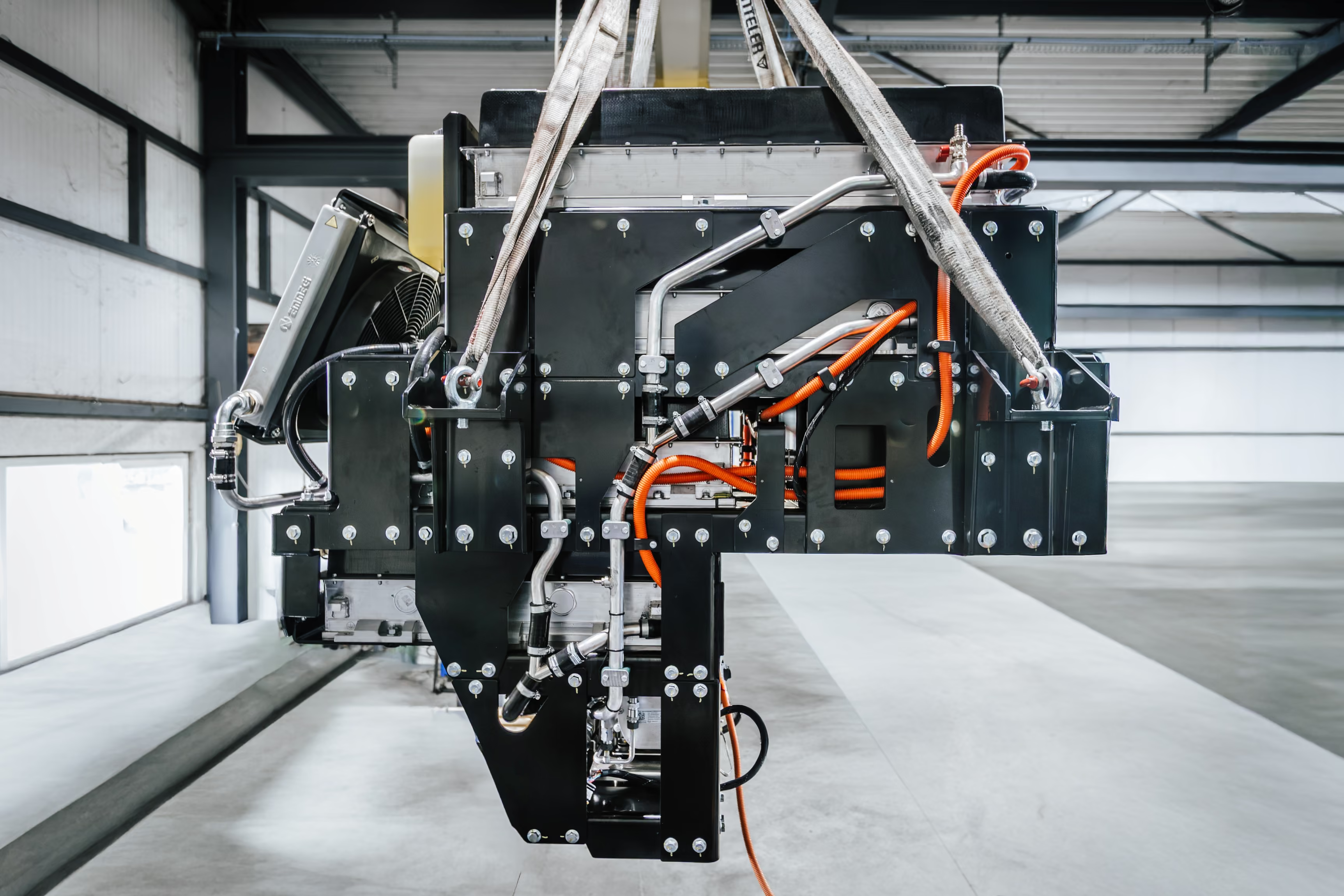
Energy storage is more than a battery pack. It's a subsystem with electrical, thermal, mechanical, and software interfaces that all need to work correctly within the full EV system.
Renco approaches energy storage at the system level — defining how the battery integrates with the powertrain, the high-voltage architecture, and the vehicle control system. Whether you arrive with a battery supplier already selected or are looking for a recommendation, we take ownership of making it work as part of the complete system.
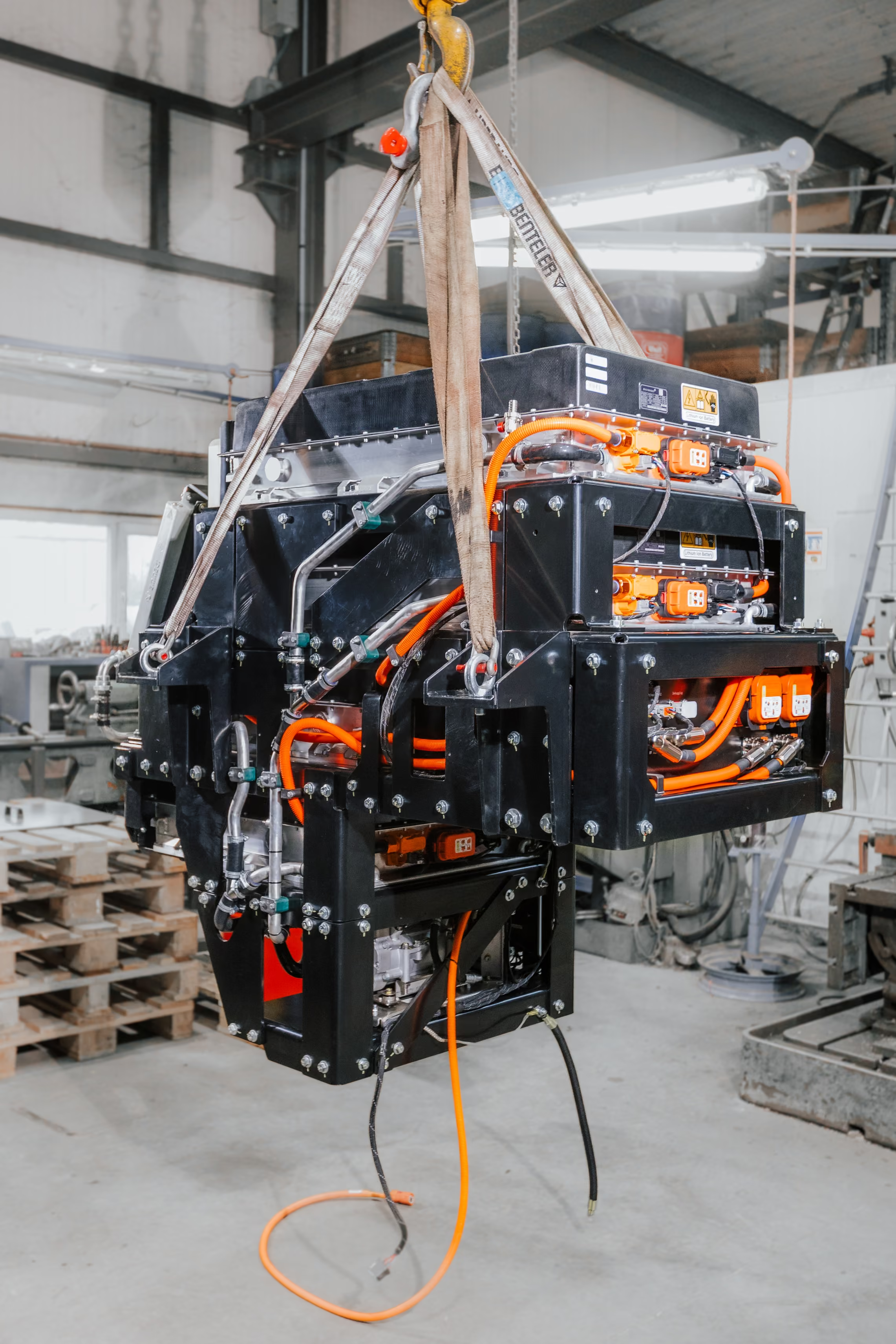
Our reference energy storage architecture is based on a string-based concept, where each string delivers a defined energy capacity and total system capacity scales by adding parallel strings.
The key advantage is that voltage remains constant across all configurations. That means energy capacity can be increased — to address different vehicle variants or duty cycle requirements — without changing the inverter voltage class or the powertrain selection.
This gives programs a clear path to scale without redesigning the electrical system foundation.
Our validated reference system is the starting point for programs that don't yet have a battery supplier — defined and applied to work reliably with our powertrain and control architecture, reducing integration risk from the start.
If you already have a battery supplier, we work with what you have. The integration scope adjusts, but the outcome is the same: a battery system with clearly defined interfaces that behaves predictably as part of the full EV system.
Battery temperature directly affects performance, range, and longevity. Keeping the pack within its defined operating limits across real duty cycles and ambient conditions is not optional — it's a system requirement.
Renco designs and integrates the Battery Thermal Management System as part of the energy storage block. This includes the heat pump module, cooling components, sensors, actuators, and the control software that manages thermal behavior across all operating states.
The BTMS is treated as an integrated part of the subsystem, not an add-on.
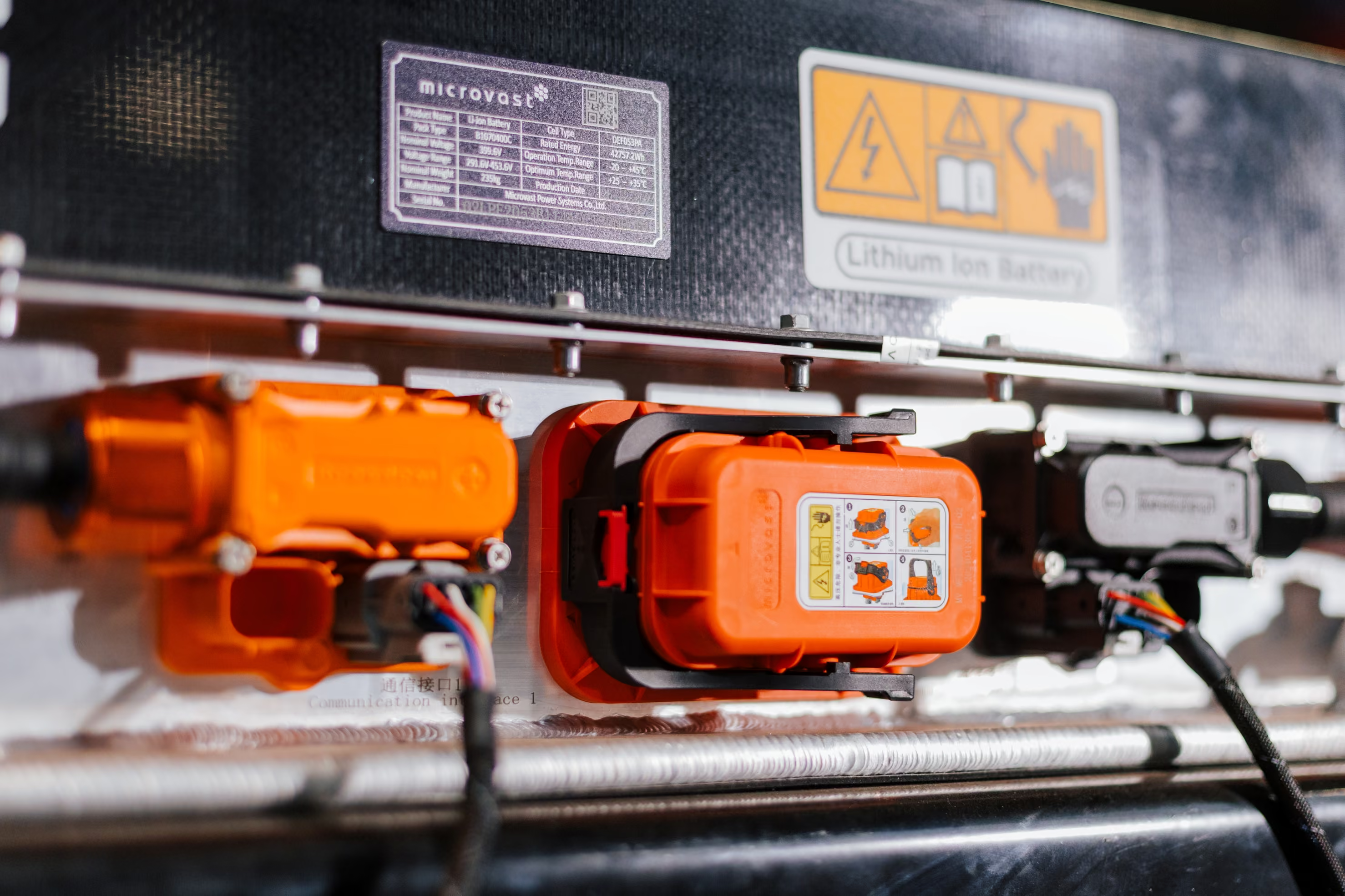
The energy storage system connects to the rest of the EV system through three clean interfaces: high-voltage connections to the power distribution unit, low-voltage connections to the relay and auxiliary architecture, and CAN communication to the vehicle control system.
These interfaces are defined early and treated as fixed boundaries — so the battery behaves as a predictable, well-contained subsystem within the full vehicle architecture.

Explore Auxiliaries

Talk to engineers who’ve been here before
If you’re responsible for an EV program and want to reduce uncertainty before it becomes risk, let’s talk.
We’ll review your system reality and outline a clear, feasible next step.