Powertrain
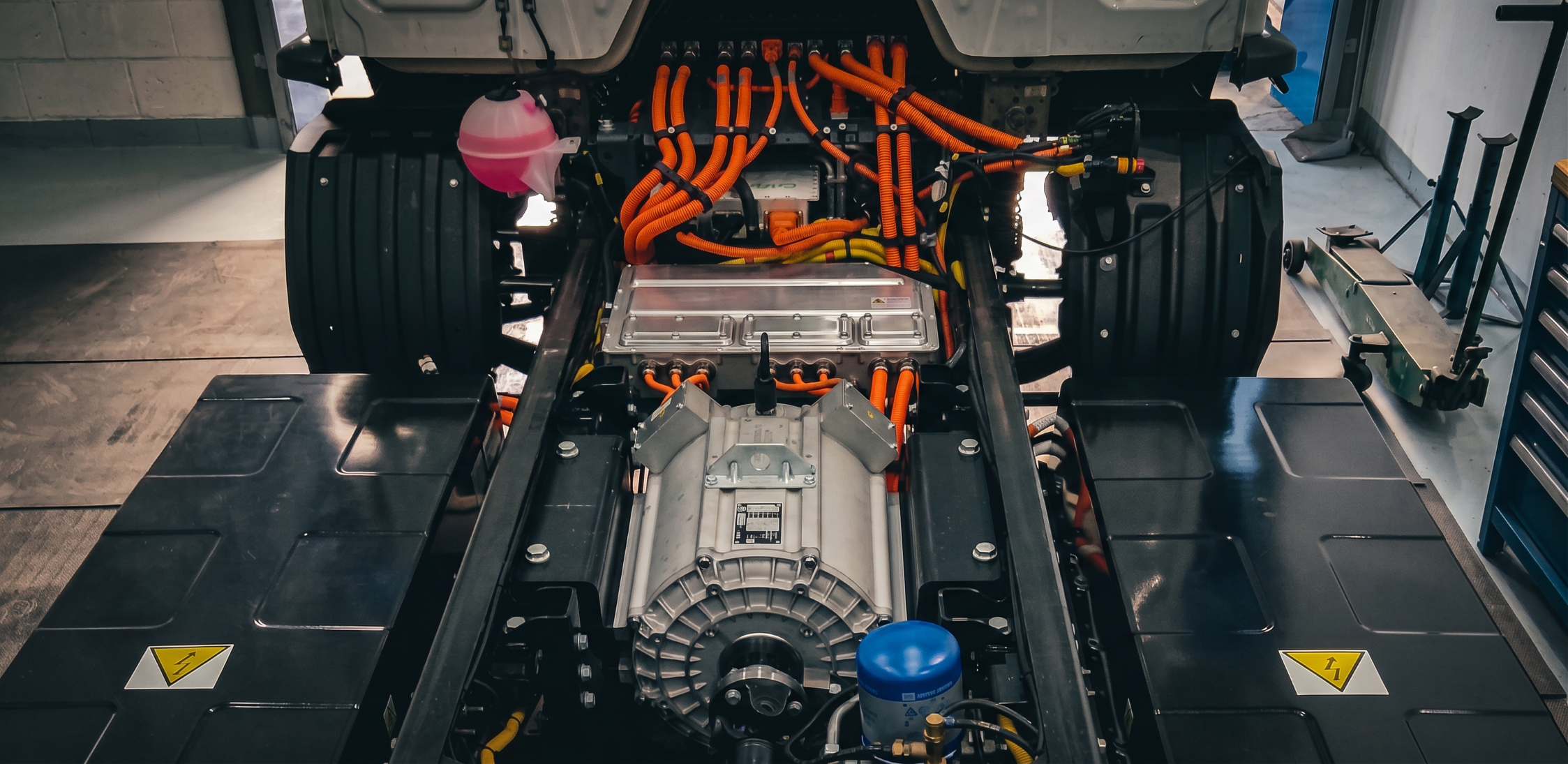
The right motor and inverter combination is the foundation of every electric vehicle program. Get it wrong and everything built around it becomes harder to fix.
Renco supplies and integrates Dana TM4 motor and inverter systems for commercial vehicles, off-highway machines, and special-purpose platforms. As an authorized Value Added Reseller, we combine direct access to one of the most capable industrial propulsion portfolios available with the engineering depth to make it work correctly in your specific vehicle.You can come to us for the hardware alone. Most customers find they need more.
15 years with one platform
Renco has been working with Dana TM4 motors and inverters since 2010. Not as a recent addition to our portfolio — as the foundation our integration work has been built on.
That length of experience doesn't show up in a single story. It shows up in the accumulated knowledge of how these systems behave across vehicle types, duty cycles, and real operating conditions. It's what allows us to move faster, anticipate problems earlier, and integrate with a level of confidence that comes only from having done it many times before.
Choosing the right motor and inverter starts with understanding what the vehicle actually needs.
For retrofit programs, we work from the original powertrain — matching or exceeding the torque and speed range of the engine being replaced, accounting for driveline ratios and the real operating demands of the vehicle.
For new platforms, we define the requirement from first principles: vehicle weight, tire size, gradability, startability, and duty cycle. From there we size the powertrain and validate the selection through vehicle simulation before anything is specified or ordered.
The output is a motor and inverter combination we can stand behind — not a best guess.
Fitting the motor and inverter into the vehicle requires solving two connected problems: how it connects to the driveline, and how it mounts to the chassis.
For the driveline connection, we work from the specific interface the application requires — direct propshaft or driveshaft connection with the appropriate flange, or an interface to an existing transmission. When the installation requires an additional coupling, we work with our suppliers to define the right solution for the application.
Packaging and mounting are defined in parallel. Envelope constraints, chassis geometry, and access requirements all shape how the system gets installed. Renco handles the mounting design as part of the integration process — the goal is a clean, serviceable installation that holds up under the loads and vibrations your vehicle will see in operation.
The motor and inverter connect to two critical parts of the EV system: the high-voltage power distribution and the vehicle control architecture.
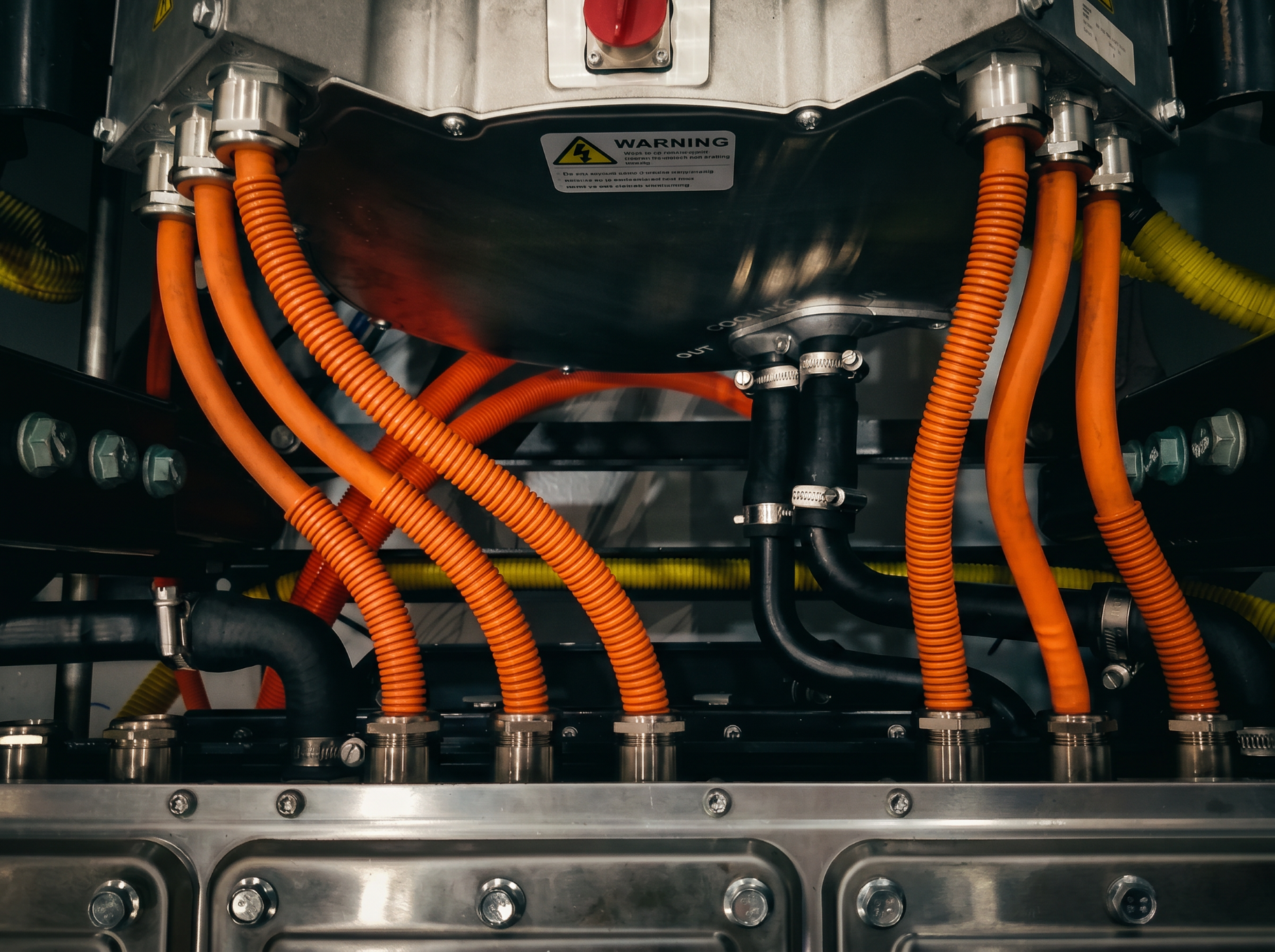
Renco defines and implements both interfaces as part of the integration process — including HV cabling to the power distribution unit and the control connections required for the powertrain to operate as part of the full system.
The powertrain generates heat under load. Managing that heat is not optional — it directly affects performance, efficiency, and component life.
Renco defines the cooling requirements for the motor and inverter as part of the integration process and ensures they are addressed within the vehicle's thermal architecture. For full system projects this is handled as part of the Thermal Management block.

Explore Control System

Talk to engineers who’ve been here before
If you’re responsible for an EV program and want to reduce uncertainty before it becomes risk, let’s talk.
We’ll review your system reality and outline a clear, feasible next step.