Thermal Management
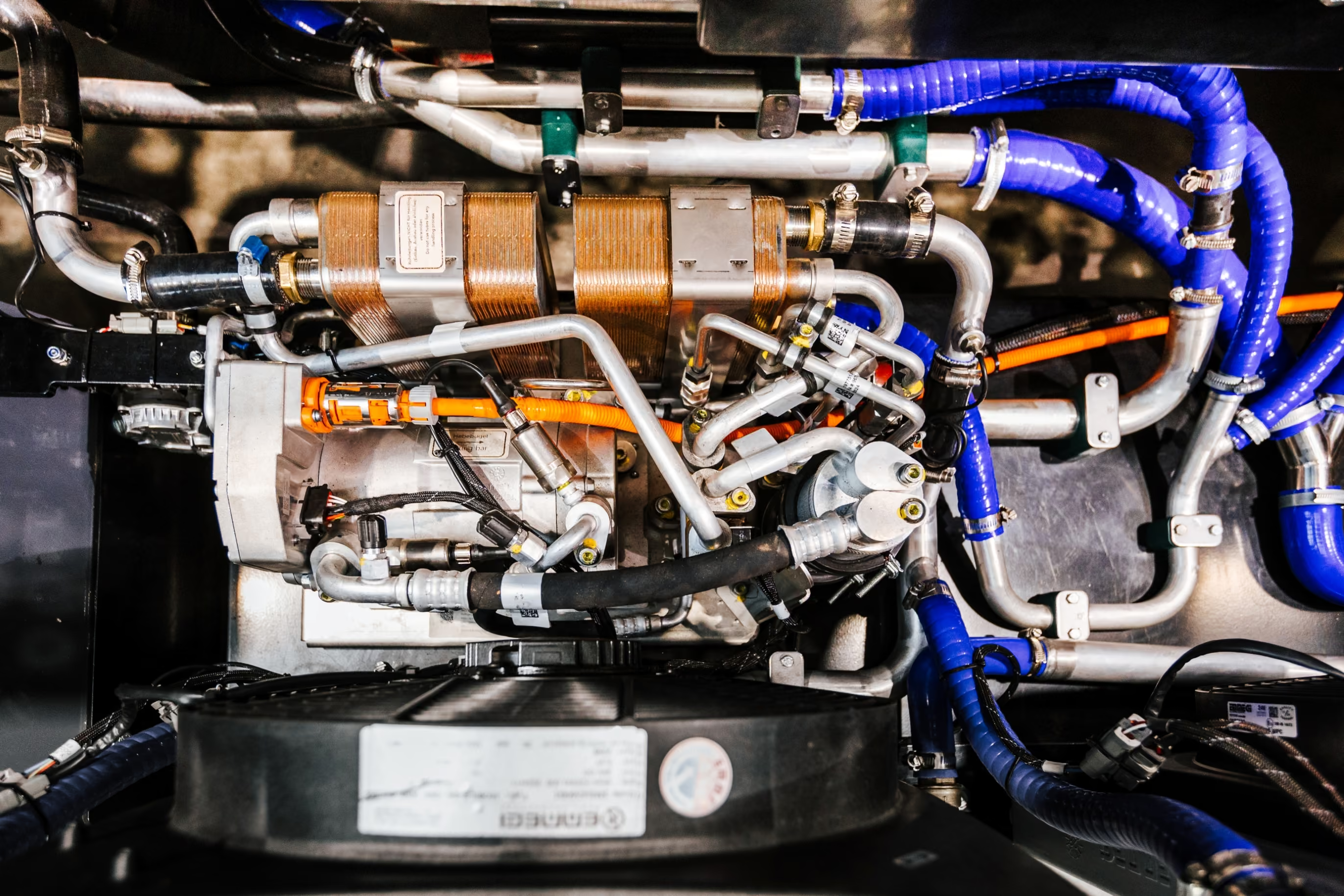
Thermal management is one of the least visible parts of an EV system and one of the most consequential. Get it wrong and components derate, behavior becomes inconsistent, and service life shortens. Get it right and the system performs predictably across its full operating range.
Renco approaches thermal management as a system-level discipline. Cooling loops, heat pump modules, and control logic are designed together — not as isolated subsystems bolted together after the fact.
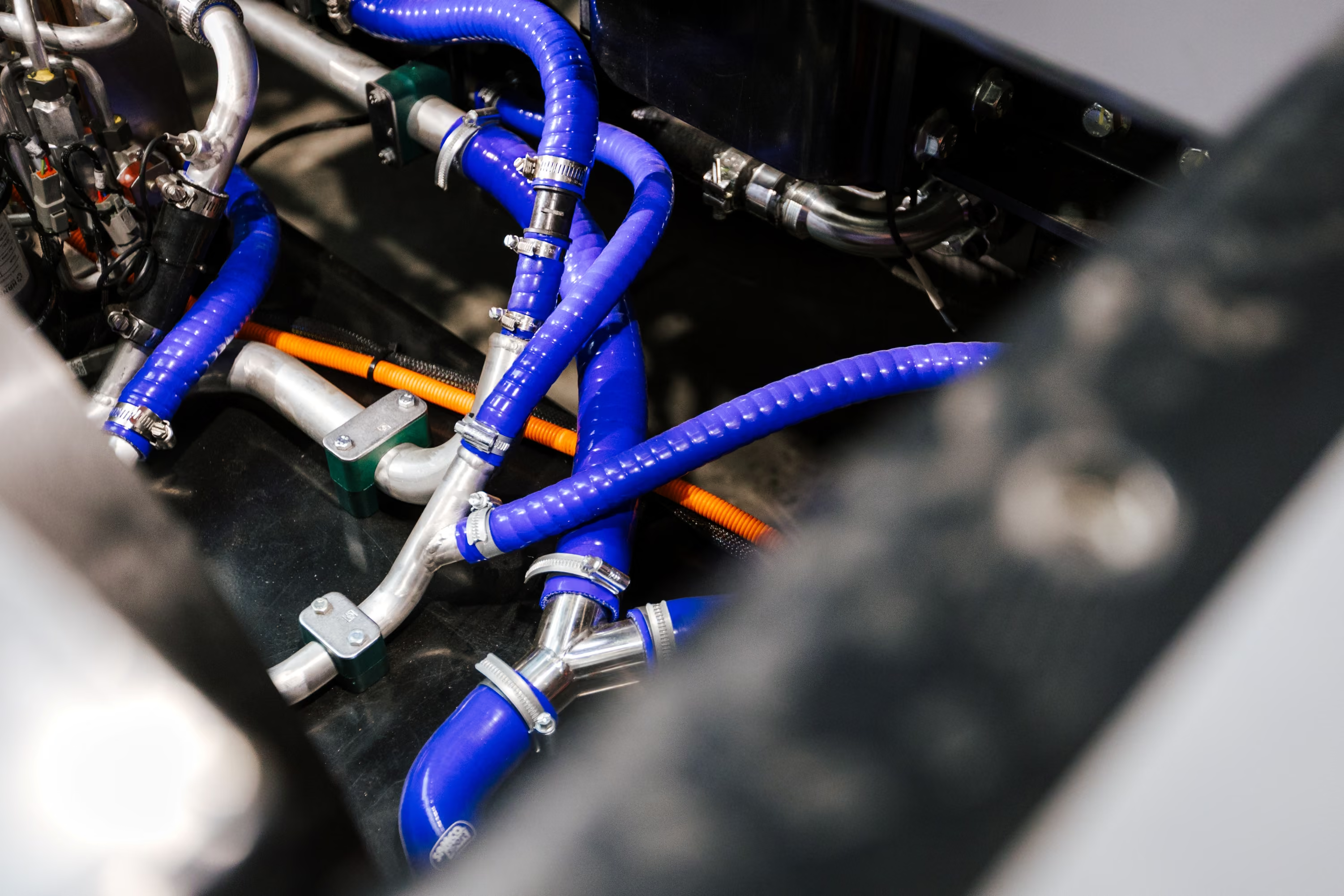
Every vehicle has different thermal demands. The number of cooling loops, how they are shared or separated, and how heat is rejected to ambient all depend on the components in the system, the duty cycle, and the packaging constraints of the specific vehicle.
Renco defines the thermal architecture from those requirements — designing the right number of loops, the right shared infrastructure, and the right boundaries between subsystems to keep every component within its operating limits across all conditions.
The result is a thermal system that is as simple as it can be, and as complex as it needs to be.
The motor, inverter, power electronics, and auxiliary drives all generate heat under load. Managing that heat is not a single problem — each component has different temperature limits, different sensitivity to thermal variation, and different consequences when those limits are exceeded.
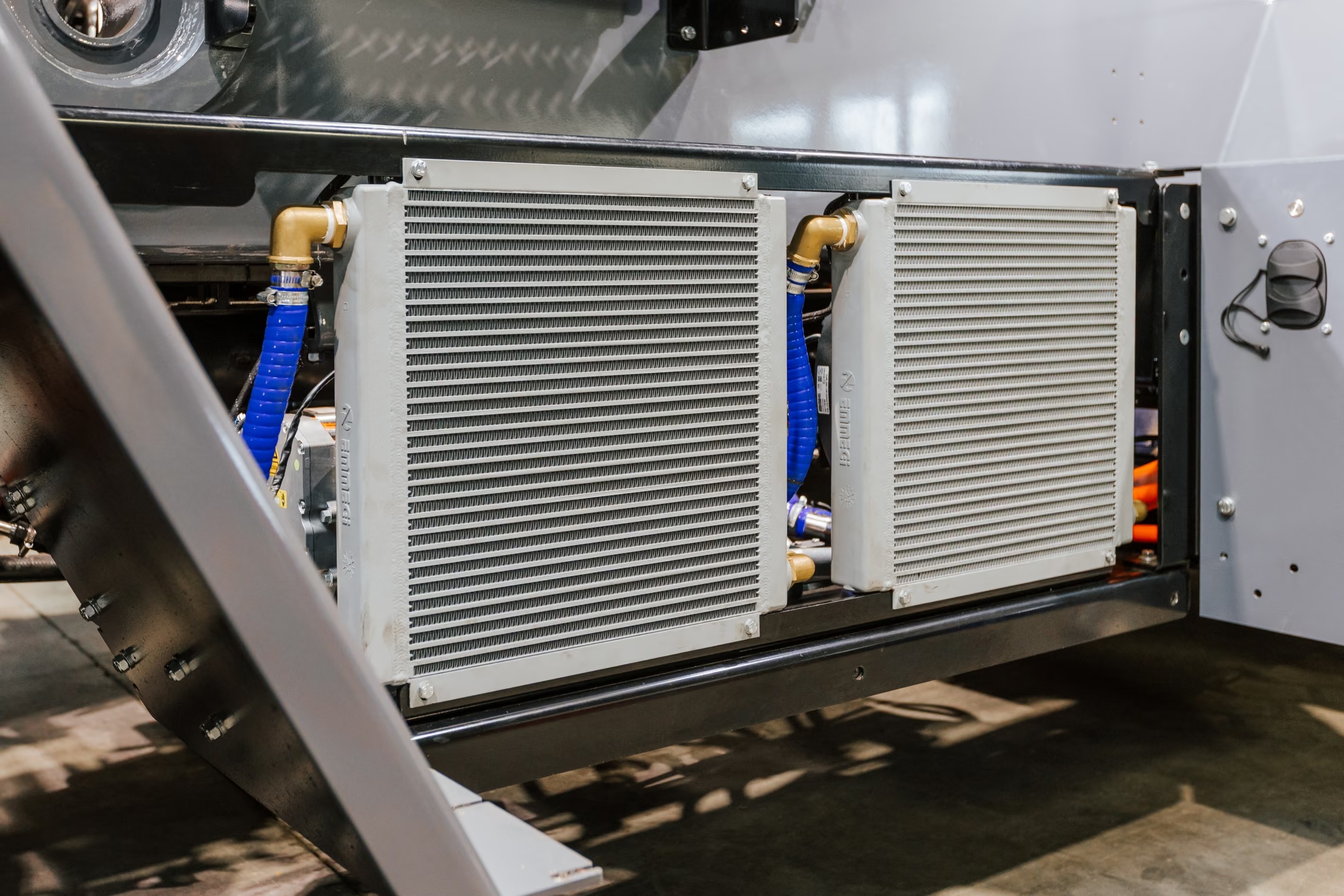
Renco sizes and integrates the cooling system based on the real duty cycle of the vehicle — continuous operation, peak loads, ambient conditions, and the interaction between components sharing the same thermal infrastructure.
The control software that manages coolant flow, pump speed, and thermal states runs inside the VCU, giving the vehicle control system full visibility and authority over thermal behavior across all operating conditions.
Cabin climate in an electric vehicle can't rely on waste heat from a combustion engine. It needs to be actively managed — and ideally integrated with the rest of the vehicle's thermal architecture rather than treated as a separate system.
Where the application requires it, renco integrates a cabin thermal management system using a heat pump module on the main cooling loop. This allows the CTMS to recover heat from the powertrain circuit when available, improving efficiency without adding a separate thermal infrastructure.
As with the rest of the thermal system, the control logic runs inside the VCU — keeping cabin climate behavior visible and coordinated with the full system.

Explore Powertrain

Talk to engineers who’ve been here before
If you’re responsible for an EV program and want to reduce uncertainty before it becomes risk, let’s talk.
We’ll review your system reality and outline a clear, feasible next step.