HV Power Distribution
Every EV system has a moment where high voltage needs to be distributed safely to multiple consumers: powertrain, charging, auxiliaries, thermal systems. How that distribution is designed, protected, and integrated into the vehicle determines whether the system is safe and predictable, or a source of ongoing risk.
Renco owns this part of the system. We design and build the high-voltage architecture in-house, define the safety concept, and integrate everything into a contained subsystem with clean interfaces to the rest of the vehicle.
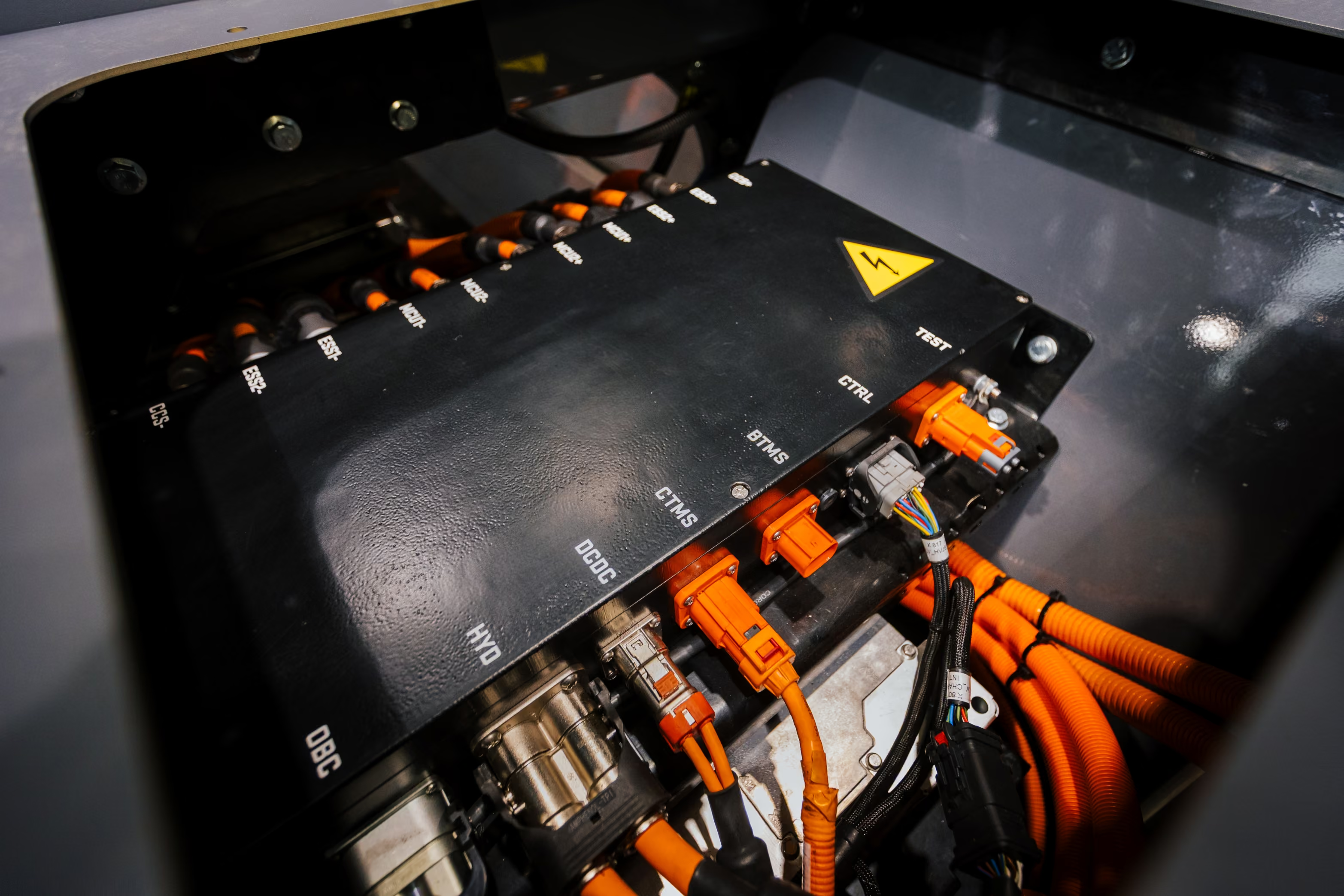
Renco's high-voltage distribution unit is designed and built in-house for each application — sized for the specific consumers, current ratings, and form factor the vehicle requires.
The PDU contains the main contactors, precharge circuit, fuses, busbars, and current sensing — all laid out on a machined plate with labeled, defined connections to every HV consumer in the system: powertrain, battery strings, on-board charger, DC-DC converter, auxiliaries, and thermal systems.
No two projects produce the same box. But the process for designing each one is structured and repeatable, built on a library of previous designs that allows us to move quickly without starting from scratch.
Working with high voltage means designing for the moment something goes wrong — before it happens.
Renco defines the HV safety concept as an integral part of the architecture. This includes high-voltage interlock loops that open the main contactors if the system is accessed unexpectedly, isolation monitoring to detect insulation faults before they become dangerous, controlled power-down sequences following fault events, and torque monitoring based on DC current consumption to detect abnormal system behavior.
These are not features added at the end. They are built into the architecture from the start, so your team and ours can work on the system with confidence.
Where packaging allows, renco integrates the high-voltage components into a single structural subsystem — the e-cradle.
The e-cradle brings together the HV-PDU, DC-DC converter, on-board charger, control units, cooling components, and auxiliary systems into one assembled and tested unit. It is built and verified in our facility in Cologne before it reaches your vehicle.
The result is a subsystem with defined mechanical, electrical, and control interfaces that drops into the vehicle as a single unit — reducing installation effort, simplifying commissioning, and giving you a tested baseline before vehicle integration begins.
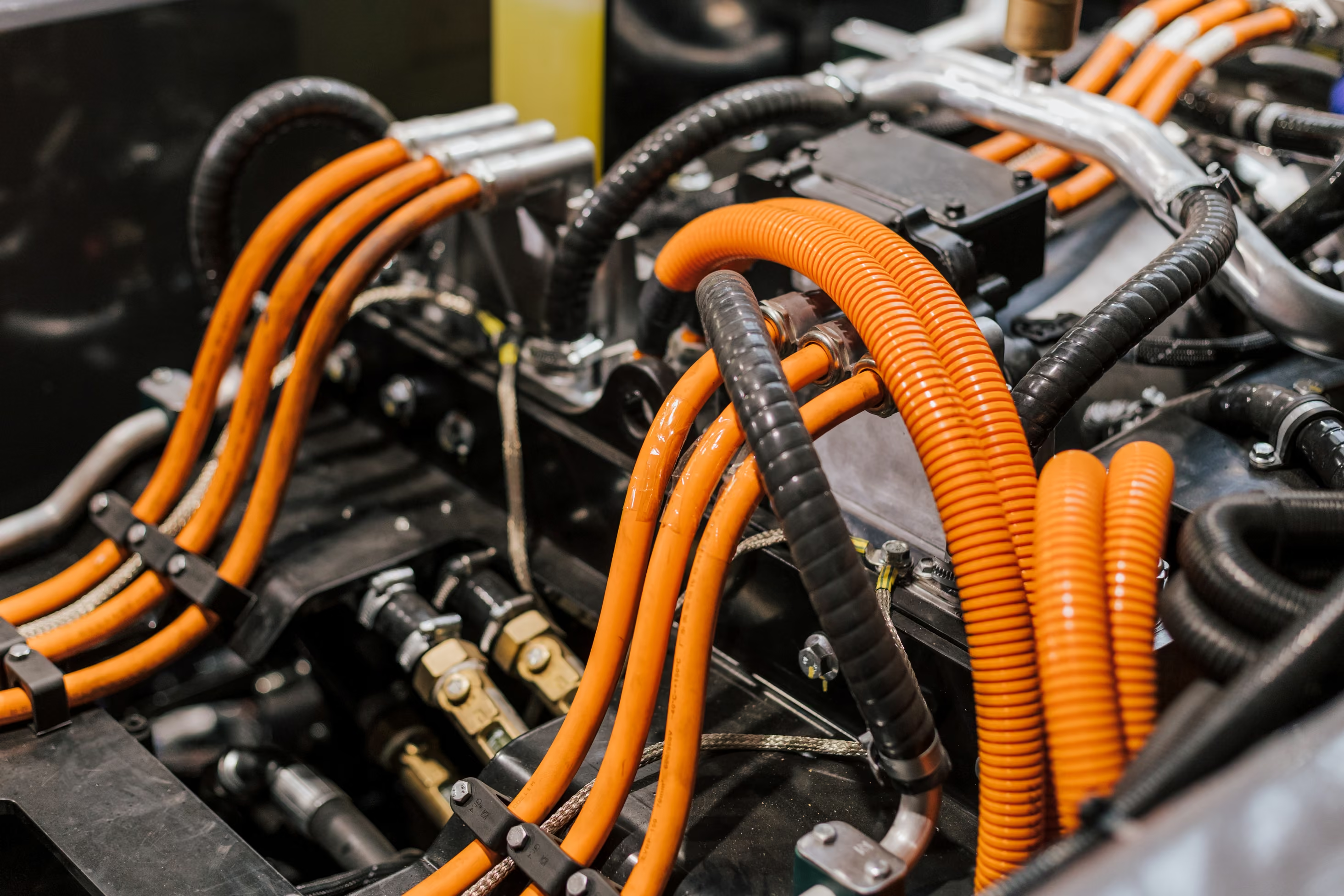
High-voltage cables are not just wiring. Their routing, protection, sizing, and termination affect both safety and system reliability across the full operating life of the vehicle.
Renco defines and implements HV cable routing as part of the full integration process — specifying cable cross-sections, protection requirements, connector selection, and routing paths based on the vehicle architecture and the operating conditions the system will face.
Every HV interface is defined with clear boundaries, so each subsystem connects to the next with no ambiguity about responsibility or behavior.

Explore Energy Storage

Talk to engineers who’ve been here before
If you’re responsible for an EV program and want to reduce uncertainty before it becomes risk, let’s talk.
We’ll review your system reality and outline a clear, feasible next step.